

Quick Summary
Trenchless sewer repair rehabilitates pipes through small access points using pipe lining or pipe bursting, preserving landscaping and completing work faster, while traditional excavation digs trenches to fully expose and replace damaged sections. Trenchless methods work best for structurally intact pipes and typically cost more upfront but save on restoration expenses, whereas traditional repair is necessary for fully collapsed pipes or major structural defects. A video camera inspection is essential to determine which method is feasible based on the exact condition and location of the damage.
Key Takeaways
- Schedule a video camera inspection before choosing a repair method to identify the exact type and extent of sewer line damage and confirm whether trenchless repair is structurally possible.
- Choose trenchless repair when the pipe is damaged but still intact and you want to avoid disturbing landscaping, driveways, or patios while completing the project in as little as one day.
- Opt for traditional excavation when the sewer line has fully collapsed, requires correction of severe alignment issues, or needs complete system replacement rather than partial repair.
- Factor restoration costs into your decision since trenchless repair avoids yard and concrete damage that traditional methods require, often offsetting the higher upfront expense with long-term savings.
Sewer line problems can disrupt everyday life, damage your property, and create expensive issues if they are not handled quickly. When a pipe beneath your yard fails, most homeowners face a critical choice: trenchless sewer repair or traditional excavation. Both methods solve the problem, but they work in very different ways and come with different costs, timelines, and long-term benefits.
For homeowners in Hemet and throughout Riverside County, understanding the differences can make the decision far less stressful. At 5 Star Plumbing, we provide full sewer services across the region, and a clear explanation of both methods helps ensure you choose the right repair approach for your home and budget.
How Sewer Line Repair Works
Before deciding between trenchless or traditional methods, it is important to understand how sewer line failures occur and what signs indicate a problem.
Signs Your Sewer Line May Need Repair
A failing sewer line often releases several early warning signs. These may include:
- Slow or gurgling drains throughout the house
- Backups in toilets, sinks, or tubs
- Sewage odors around your home or yard
- Wet or sunken patches in the soil
- Pest activity near plumbing points
- Soil shifting or foundation movement
As explained by the U.S. Environmental Protection Agency, uncontrolled sewer line failures or blockages can lead to sanitary sewer overflows that threaten water quality and create health and property risks.
Suppose your drains begin slowing down in multiple locations at once. In that case, it is usually a sign of a deeper issue, and recognizing the early signs that you may need emergency plumbing can help prevent more extensive damage. Persistent drain issues may require more than basic cleaning, and knowing when your drains need professional cleaning can help you understand whether the problem is isolated or connected to a deeper sewer line failure. Homeowners often begin by exploring professional drain services offered by licensed plumbers.
Common Causes of Sewer Line Damage
Sewer lines can fail for many reasons. Common causes include:
- Aging or corroded pipes
- Tree root intrusion
- Shifting soil or ground movement
- Heavy vehicle traffic or surface pressure
- Faulty installation practices
- Material deterioration over time
Issues like tree root invasion or underground soil shifts can also affect nearby underground systems. In some homes, owners first notice signs of underground line problems through water-related issues that eventually require water line installation and repair services.
What Is Trenchless Sewer Line Repair?
Trenchless sewer repair has become increasingly popular because it allows technicians to fix or replace damaged pipes without digging large trenches through the yard. Instead of removing the entire pipe, trenchless technology uses small access points to rehabilitate or replace the pipe internally.
How Trenchless Repair Works
Two primary trenchless methods are used today:
- Pipe Lining (CIPP): A flexible liner coated with epoxy is inserted into the damaged pipe. Once cured, it forms a durable new pipe inside the existing one.
- Pipe Bursting: The existing pipe is fractured outward while a new pipe is simultaneously pulled into place.
Both methods require minimal digging and are typically completed in a shorter timeframe than traditional excavation.
Advantages of Trenchless Repair
Trenchless technology offers several benefits:
- Minimal disruption to landscaping, sidewalks, and driveways
- Faster project timelines with fewer days of construction
- Long-lasting materials that resist corrosion
- Less property restoration required
- Environmentally friendly due to reduced excavation and debris
For many homeowners, the biggest advantage is the reduced impact on landscaping and hardscape. Preserving yards, patios, and driveways often translates to significant savings in post-repair restoration costs.
Limitations of Trenchless Repair
Trenchless methods are not suitable for every situation. They may not be the right choice for:
- Fully collapsed or crushed pipes
- Extremely offset joints
- Pipes made of materials incompatible with lining
- Properties with limited access points
A sewer professional needs to evaluate the condition of the existing pipe before confirming whether trenchless repair is possible.
What Is Traditional Sewer Line Repair?
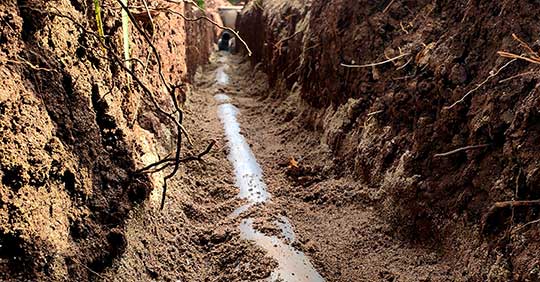
Traditional repair, also known as excavation, is the long-standing method of sewer replacement. This approach involves digging a trench along the length of the pipe to access and replace the damaged section directly.
How Traditional Repair Works
Technicians excavate the soil above the sewer line, fully expose the pipe, remove the damaged section, and replace it with new piping. Once the replacement is complete, the trench is backfilled and compacted.
Advantages of Traditional Repair
Traditional sewer line repair offers clear benefits in situations where trenchless methods are not feasible:
- Allows repairs for pipes that are completely collapsed
- Corrects major alignment issues or structural defects
- Makes full system replacement possible instead of partial repair
For severely damaged lines, excavation is often the best method to restore proper drainage and long-term function.
Drawbacks of Traditional Repair
The biggest drawbacks involve property disruption and restoration costs. This method often requires:
- Removing and replacing grass, gardens, or landscape features
- Breaking and re-pouring concrete if pipes run under driveways or patios
- Longer completion timelines
- Higher labor costs due to excavation and restoration
Despite these challenges, traditional excavation remains necessary for many older or heavily damaged systems.
Trenchless vs Traditional Sewer Repair: Cost Breakdown
Choosing the right method often comes down to cost, but several factors influence pricing for both options.
Factors That Influence Cost
Repair costs vary based on:
- Depth and length of the sewer line
- Type of damage and severity
- Soil conditions
- Equipment needed
- Permit requirements in Riverside County
Deeper lines or rocky soil can increase excavation costs, while long sections of pipe increase material needs for trenchless methods.
Typical Cost Ranges
While every project differs, trenchless repair is often slightly more expensive upfront than small excavation repairs. However, homeowners frequently save money later because trenchless repair avoids landscaping, concrete, and hardscape restoration.
Traditional repair may be less expensive for short, shallow repairs but becomes costly when excavation requires removing large sections of yard or concrete.
Long-Term Value
When evaluating long-term value, consider material lifespan, warranty coverage, future maintenance needs, and restoration costs after the repair. Delayed repair can also allow underlying damage to worsen and create more serious issues over time. The Centers for Disease Control and Prevention warns that malfunctioning wastewater systems can release untreated sewage into surrounding soil and water, which creates environmental and public-health risks when problems are not addressed promptly. Many homeowners choose trenchless methods because the durable materials and reduced excavation help limit future maintenance needs and lower the likelihood of major failures.
Choosing the Right Method for Your Home
The best repair method depends on your pipe condition, soil environment, and property layout.
Questions to Ask Your Plumber
Having the right information helps you make a confident decision. Ask your technician:
- Is the pipe structurally sound enough for trenchless repair?
- Will any part of the driveway, patio, or yard need to be removed?
- What is the expected completion time for each method?
- What warranties are included?
- Are any restoration costs expected after the repair?
When Trenchless Is Usually the Best Fit
Trenchless repair is usually ideal when:
- The pipe is damaged but still structurally intact
- You want to avoid disturbing landscaping or concrete
- You need fast results with minimal disruption
- Access points allow for equipment placement
When Traditional Repair Is the Better Option
Traditional excavation is typically the right choice when:
- The pipe has fully collapsed
- There are severe alignment or structural issues
- No suitable access points exist for trenchless methods
- Full pipe replacement is required
Why a Camera Inspection Matters
Accurate diagnosis is essential before choosing a repair method. A video inspection helps identify the exact location and severity of the damage, providing a clear picture of whether trenchless repair is feasible. Many homeowners rely on professional video leak detection to understand the true condition of their sewer lines before making any decisions.
Why Work With a Local Expert in Riverside County
Sewer repair requires experience, precision, and familiarity with local code requirements.
Knowledge of Local Codes and Requirements
Riverside County has specific rules regarding excavation depth, safety practices, and sewer line installation. Repairs must comply with local regulations and often require permits and inspections.
Experience of 5 Star Plumbing
Choosing a team that understands the region’s infrastructure makes a significant difference. At 5 Star Plumbing, we are familiar with older home construction in Hemet, soil types throughout Riverside County, and the common causes of sewer failures across the area.
At 5 Star Plumbing, we provide reliable plumbing services backed by licensed technicians, modern equipment, and clear communication from start to finish.
Your Trusted Team for Sewer Repair in Riverside County
If you are dealing with sewer line problems, choosing the right repair method is easier when you have a technician who can evaluate the exact condition of your line and outline the pros and cons of trenchless and traditional options.
At 5 Star Plumbing, we offer full sewer diagnostics, honest recommendations, and reliable repair solutions for homeowners in Hemet and the surrounding communities. To schedule our services or request an inspection, reach out to us today.
If you have any more questions and concerns about trenchless and traditional sewer repair, then the questions and answers below may help you.
FAQ
What is the difference between trenchless and traditional sewer repair?
Trenchless repair rehabilitates or replaces the sewer line without digging trenches through your yard, while traditional repair requires excavation to expose and replace the pipe directly.
Is trenchless sewer repair more expensive?
Trenchless repair usually has a higher upfront cost but often saves money on restoration because yards, landscaping, and driveways are not damaged during the process.
Can trenchless repair fix a fully collapsed sewer pipe?
No. A fully collapsed pipe typically requires traditional excavation because trenchless methods rely on some structural stability in the existing pipe.
How long does sewer line repair take?
Trenchless repairs can often be completed in one day. Traditional excavation may take several days depending on pipe length, soil conditions, and restoration needs.
Do I need a camera inspection before choosing a repair method?
Yes. A video inspection is essential for identifying the exact type and extent of damage and determining whether trenchless repair is feasible.